The financial institutions across the globe faced an enormous $4.5 billion in AML and KYC penalties in 2024. This shocking figure represents a fundamental change in the mechanism of regulatory compliance, particularly within the high-temperature environment of a forex market. Password-based traditional systems of authentication and document verification are buckling under the pressure of advanced fraud practices and compliance requirements.
The forex trade is at a juncture. The abandonment rate of digital onboarding in 2022 stands at 68 percent, posing brokers with a dual challenge: ensuring ironclad levels of security; and providing users with a frictionless experience. In comes biometric identity verification in forex, a technology that is quickly transforming the way traders are verifying their identity and are gaining access to international currency markets.
This change is not only simple convenience. It is about staying alive in that field where one security breach may end decades of trust and unleash regulation sanction that may cripple the operations.
What is Biometric Identity Verification Forex?
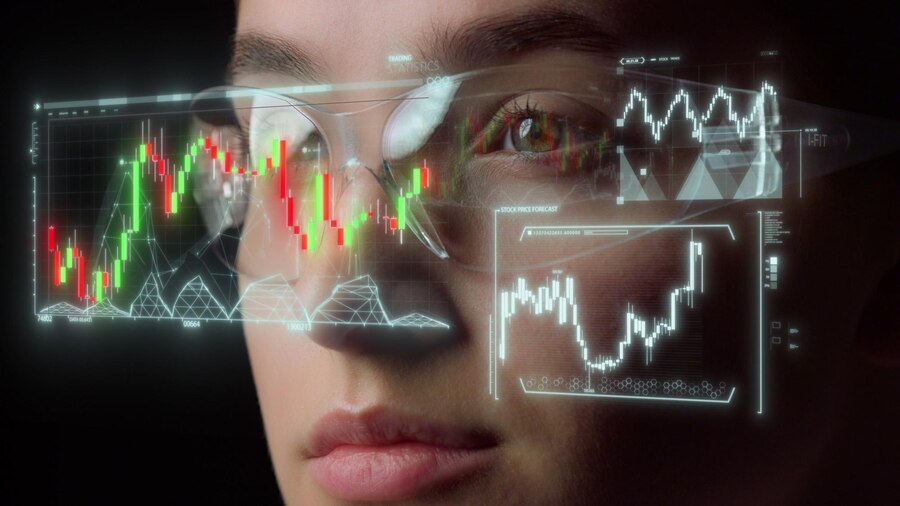
Biometric identity verification Forex involves identity verification through the use of unique biological identifiers such as fingerprinting, facial features or voice patterns to verify individual identity of a trader upon opening an account and subsequent transactions. These biological indicators are not theftable or replicable: as opposed to old methods of security questions or coding via passwords.
This is generally done in three main steps which include: retrieving biometric data with the aid of a smartphone camera or sensor, matching it to templates stored in the system using sophisticated algorithms and access is only given where such a match satisfies pre-set security levels. This technology has now found its way to most of the recent forex sites as platforms merge with their mobile technology, as traders now have to be identified in seconds instead of days.
This technology helps financial institutions to adhere to strict Know Your Customer (KYC) regulations and at the same time massively minimizing the vitality of fraud. The system functions by scanning ID documents via either their photographs or chip data, and comparing it with the current live selfie biometrics after which a citizen can be sure that the individual attempting to create an account is the one claiming to be.
What KYC Evolution Looks Like in 2025
Regulatory waters have been changing within seismic shifts in the years 2024 and 2025. The EU sealed the Anti-Money Laundering Regulation (AMLR) in March 2025, creating a single European rulebook where laws have demanded every member state to conduct risk-scoring and beneficial ownership checks.
In the meantime, the Financial Action Task Force (FATF) revised Recommendation 15 on Virtual Assets in July 2024 by fixing the Travel Rule timelines and added more cryptocurrency red flags directly affecting forex traders who have to deal with virtual money.
These regulatory developments have given technology adoption a boost. The Financial institutions in Egypt are moving towards adopting the e-KYC platforms involving biometric verification, facial recognition with uploading of digital documents using the Central Bank of Egypt. The same pattern is developing in Asia-Pacific, Europe and the North of America.
The overlap is unambiguous. Whether in the EU or UAE and Singapore or the UK, KYC rules are meeting on grounds in regard to scope, standards and supervisory expectations. This standardization offers opportunities and challenges of forex brokers operating in different jurisdictions.
The Biometric Identity Verification in Forex Reality of How It Works
The current biometrics used in the forex market run on advanced multi layered authentication programs. Biometric authentication and image recognition technologies allow remote verification approaches, such as liquid eKYC, which was recently implemented at Forex.com. The system verifies the ID documents and at the same time comparing the ID documents against the live facial biometrics.
There are a number of essential components to the technology stack. Higher-level machine-learning algorithms study face geometry, comparing distances between important points, such as eyes, nose, and mouth. These algorithms have led to a massive increase in correct identification of disparate populations and eliminating past fear of bias in facial detection systems.
The new standard with fingerprints, facial recognition, and voice authentication in multimodal biometric systems are becoming increasingly important as a means of authenticated security. This is an especially useful method of trading in the forex where trading scales are large and government strictness requires maximum protection.
Another important progress is being able to detect liveness. Biometric systems are up to date in detecting liveness hence verification occurring in real-time, it is more difficult to use merely photos or videos to get out of security. The ability will provide a direct response to the increased risk of deepfake attacks that the financial services sector has endured.
Real World and Market Validation
The figures are compelling in relation to the story of industry adoption. Japan Liquid crossed the 60 million digital identity checks in 2025 with a spike in the verification as the Japanese digital ID scene became more established. They have customers like large financial service providers, cryptocurrency exchanges, and conventional banks.
StoneX, the operator of Forex.com in Japan, has in particular selected the eKYC of Liquid to eliminate gaps during application by users. The company is interested in moving towards the significant rise in account opening with the help of more precise methods of pre-qualifying identity both to and in Japan residents…. The larger market follows such trends. It is estimated that the world biometric authentication market will be 76 billion in 2025 and forex and financial services will contribute much to that growth. The focus on fraud prevention technologies has become a necessity especially considering that 3.1 million biometric spoofs were blocked by Shufti Pro within the last 12 months, reflecting an increase of almost 230 percent in comparison with the results a year ago.
The adoption occurs differently and in various regions with some patterns. Financial players in Europe are taking a more active approach to working with RegTech providers to meet compliance requirements more comprehensively and are far ahead of Asian exchanges in the use of mobile-first biometrics.
Advantages and Difficulties of Realisation
Biometric identity verification has benefits that go deep into regulation compliance. The first one is security enhancements since biometric information is uniquely personal thus exponentially more difficult to compromise vs. traditional security such as passwords or even multi-factor authentication. Fingerprints and facial features cannot be lost as opposed to passwords since they can be forgotten, shared or stolen.
Another large advantage is user experience. Who would ever have time to change the password they have forgotten when markets have accelerated further than a Formula 1 vehicle? Biometric auth offers fast scan-based logins so that the traders can access their accounts without hassles and can leave the onboarding process without leaving their customers.
Nevertheless, problems exist. Correctness in specific circumstances, e.g. low-light condition to identify a face or injury detection to identify a fingerprint remains a point of problem. Scalability issues also apply to companies that want to roll out such technologies in large segments of user populations.
Privacy issues have turned out to be more complicated. Laws, such as the European General Data Protection Regulation (GDPR), place high demands on the collection of data, storage, and processing of customer data. Close attention to delicate personal data protection and high quality of customer verification should be maintained by the forex brokers.
The threat landscape keeps changing. Deepfake toolkits have already become readily affordable and can be found under 20 dollars on the market today, and so-called bot farms are operating with the intent to spoof in scale over 24-hours. This fact necessitates a constant inflow towards anti-fraud practices and revisions of the system.
The predictions and outlook towards the future
Market analysts forecast a lot of changes in the next two years. In 2026, more than 60 percent of financial institutions will be established to authenticate their customers using multi-factor biometric authentication as the main form of verification. Such a shift will precipitate an overall change in the way the forex traders interact with their platforms.
Another emerging trend is the combination of biometric systems and the Internet of Things (IoT) equipment. With the proliferation of networked devices, biometric authentication will be used to protect everything, including smart home trading installations and wearable devices that keep track of market processes.
Artificial intelligence keeps innovation going. Monument Bank is enriching real-time transaction monitoring and detection of fraudulent activity by introducing AI and machine learning solutions. The tools enhance the correctness of alerts and assist institutions to comply with reporting requirements under changing regulations.
Decentralized approaches to identity are becoming more viable with blockchain technology, and may enable traders to own and manage their own digital identities with self-sovereign identity, without references to centralized systems. Such a practice would transform the practice of cross-border dealing and improve the privacy protection.
Regulatory environment is expected to keep tightening. Cracked open against Cryptocurrency and DeFi solutions, regulations are rising as regulators in the EU, US, and Asia-Pacific are demanding strong KYC and transaction surveillance. Digital asset forex brokers should expect less lax verification measures.
Biometric Future Readiness
Biometric identity authentication of forex trading is not merely a technological upgrade. It is a paradigm change towards safer, effective and easy trading environment striking a balance between market regulations and customer satisfaction.
This new landscape needs strategic investment and planning to be successful. Forex brokers have to review their existing systems, benchmark regulatory requirements in the jurisdictions they operate and deploy solutions that can maintain their growth. The price of doing nothing is much greater than the price of securing adequate biometric verification systems, not to mention the ever-growing fines imposed by failing to do so.
The future is with the platforms that provide the smooth integration of highly advanced biometric authentication with the speed and reliability required by forex traders. With the ongoing evolution of the technology and the rising levels of regulations, players that are the earliest to adopt the technology will benefit hugely in terms of customer acquisition and retention.